
Search for Amelia Earhart leads researchers to a cluster of trees
An expedition to Nikumaroro Atoll investigated a satellite anomaly thought to be Amelia Earhart’s plane, but found a cluster of trees.


An expedition to Nikumaroro Atoll investigated a satellite anomaly resembling an airplane, but found a cluster of trees. No conclusive evidence about the fate of Amelia Earhart and her plane was found.
Expedition to Amelia Earhart’s suspected crash site finds trees
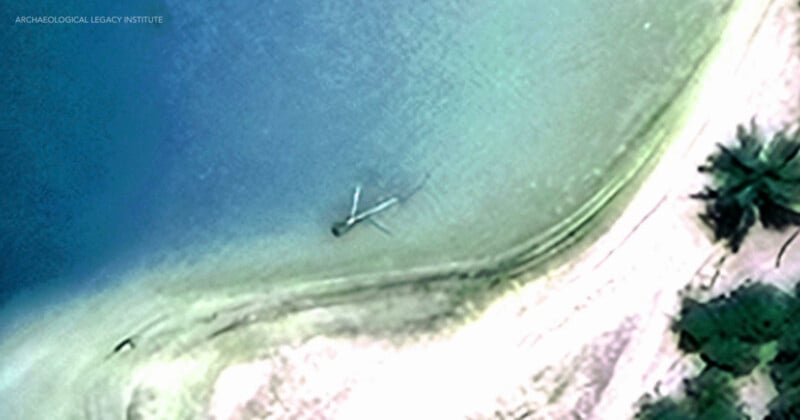
A satellite image showed an object in the lagoon near Nikumaroro Island that faintly resembled an airplane. A team of researchers from Purdue University and the Archaeological Legacy Institute traveled to the remote atoll to investigate the theory. They found that the “Tarai'a object” was a cluster of trees.
Amelia Earhart is pictured in an archival photograph taken in 1936. The photo is held by the U.S. Library of Congress.
“Unfortunately, we were unable to find conclusive evidence,” said Steve Schultz of Purdue University. The expedition was also covered by The Guardian.
Earhart’s disappearance remains a mystery
In 1937, Earhart and her navigator, Fred Noonan, disappeared as Earhart attempted to become the first woman pilot to fly around the world. Despite an extensive search-and-rescue operation, neither the aviator nor the Lockheed Electra 10-E she was flying could be found.
The search continues almost nine decades later. The latest expedition involved a six-day voyage by ship from Kiribati to the uninhabited atoll. Bad weather delayed their departure, and the team had to spend the night on the shore without going onto the island, which is home to large coconut crabs known to feed on human flesh.
Nikumaroro is an isolated island in the western Pacific, a small patch of land amid a vast expanse of water. A satellite image of the area prompted the trip. Purdue University described the anomaly in the image as visual and suggested it was most likely a cluster of large trees washed onto a sandy spit on the peninsula.

Why the object looked metallic
Richard Pettigrew of the Archaeological Legacy Institute noted a possible metallic glint in the water near Nikumaroro. However, the reflective surface of a fragment long thought to be made of metal turned out to be the result of a carbonate coating. According to Purdue University, other objects found by the team were also covered in a shiny, hardened mixture of coral sand.
The image, provided by Richard Pettigrew and the Archaeological Legacy Institute, shows the find that prompted the theory that it might be an airplane.
The university noted that the result may disappoint many people, including those involved in the search. At the same time, in its view, the expedition marked a new chapter in efforts to finally determine what happened to Earhart during her around-the-world flight nearly 90 years ago.