Camera worn by 2026 World Cup final referee joins museum collection
The RefCam worn by the referee of the 2026 World Cup final has joined the German Museum collection. Learn about the development and use of this miniature device.


The 14-gram RefCam worn by the referee of the 2026 World Cup final has been donated to the German Museum. Developed to train referees, the camera became part of broadcasts thanks to AI-powered image stabilization.
RefCam: Camera worn by 2026 World Cup final referee joins German Museum collection
From training tool to television broadcast
Cameras worn by referees at professional matches are becoming a familiar part of sports broadcasts. The Premier League first used one on air last year, and similar solutions are increasingly appearing in other sports, including baseball, American football and hockey. Now, the RefCam worn by the referee of the 2026 World Cup final has taken its place in the German Museum.
The device was developed by Riedel Communications in collaboration with active German Bundesliga referees. Work on the project began in 2023, with Thomas Riedel and referees Patrick Kessel and Nicolas Winter involved. The original goal was to create a camera for referee training.
The first test in a real match took place in late 2023, during a third-division game between Arminia Bielefeld and 1860 Munich. In February 2024, RefCam was used for the first time in a top-flight Bundesliga match. The league continued working with Riedel to help refine the device.
Beyond internal use
Initially, the camera feed was intended for use only within the refereeing system, including to assist with decision-making. Over time, RefCam began appearing regularly in television broadcasts. The device contains a miniature HD camera.
The model worn by Slovenian referee Slavko Vinčić in the 2026 World Cup final captured key moments from the Spain–Argentina match. Among them was Ferran Torres’s goal in the 106th minute, which gave Spain the win. Spain won 1–0 after extra time.

The footage was enhanced for viewers using AI-based stabilization. FIFA worked with its technology partner Lenovo to implement it. According to CineD, the processing smoothed and stabilized the RefCam image before it went on air.
A 14-gram camera in the museum
RefCam weighs 14 grams, or about half an ounce. This very version of the device, used by Vinčić in the final, is now housed in the German Museum. Riedel Communications donated the camera to the museum. Earlier this year, the company also acquired the legendary German film brand Arri.
A comparison photo shows RefCam next to a 20-euro-cent coin. Its caption describes it as a 14-gram miniature offering the best possible image transmission quality.

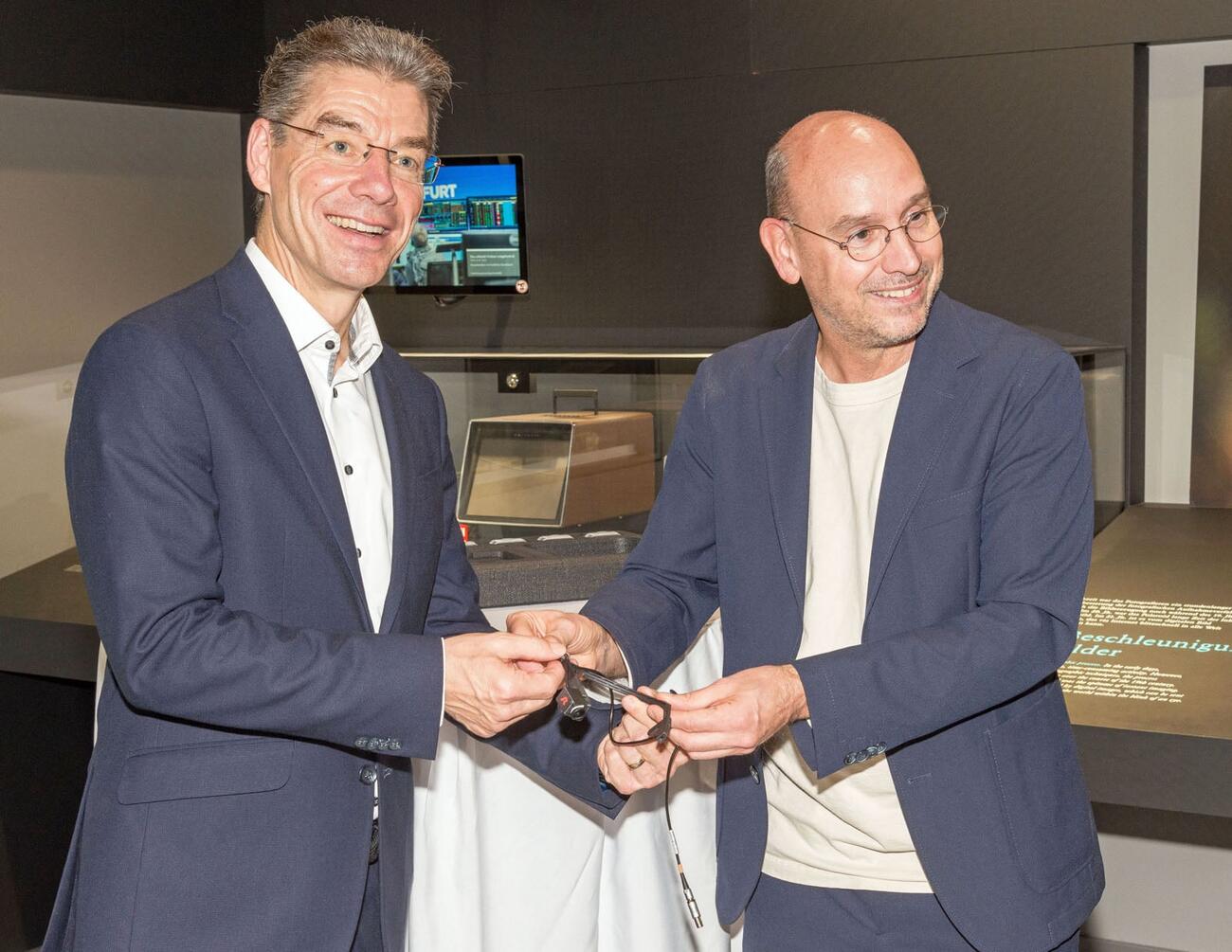
The handover took place with the museum’s director general, Michael Decker, and Thomas Riedel in attendance. In one of the photos, Decker stands to Riedel’s left. Sonia Neumann, curator of photography and film, and Dominik Scholler of the Bundesliga also attended the handover and signing ceremony. The handover and signing formally established the Final-RefCam’s status as a cultural artifact in the museum collection. In another photo, Riedel hands the camera to Decker.
“When developing RefCam, we set out to create an extremely lightweight camera that would not interfere with referees in any way, while still delivering excellent image quality for broadcasts,” said Thomas Riedel.
He added that it was a special honor for the entire team to see their creation featured in the German Museum’s permanent exhibition alongside important milestones in the history of technology, following its successful use in the world’s largest stadiums.
First-person cameras in sports
RefCam’s perspective changed how viewers watched the FIFA World Cup matches. Miniature cameras are also transforming other sports broadcasts: for example, all 22 Formula 1 drivers now wear small cameras inside their helmets.

First-person footage gives viewers a sense of being there and shows angles that ordinary television cameras cannot capture.
The German Museum has been collecting materials on the development of cameras for 120 years. Its director general, Michael Decker, noted that he is particularly impressed by the miniaturization of technology alongside the sharp rise in image quality. As a fan, he also believes it is important that the camera lets all viewers see the familiar perspective of a football referee.
Photos and materials about RefCam were provided by Riedel Communications and the German Museum.