Fujifilm to increase archival tape production fivefold
Fujifilm will invest around 10 billion yen to expand production of archival magnetic tape and increase output fivefold.

Fujifilm will invest around 10 billion yen to expand its factory and increase tape production fivefold by 2028. Demand is rising due to AI and cloud services; the medium is attractive for its durability and offline storage.
Fujifilm to increase production of magnetic tape for data archiving fivefold
Magnetic tape remains a popular medium for long-term storage of large volumes of information, despite the development of fast flash drives. The growth of cloud services and generative AI is increasing demand for archives, and Fujifilm plans to significantly expand production of this type of storage media.
The company, known to photographers for its digital cameras, Instax and photographic film, is also the world's largest manufacturer of magnetic tape for data storage. To strengthen its position in the market, Fujifilm plans to increase production capacity fivefold.
Investment and production expansion
The company will invest around 10 billion yen — approximately $63.367 million at the current exchange rate — in modernizing its Kanagawa Factory in the city of Odawara. The work is scheduled to take place from fiscal 2026 through fiscal 2028. The funds will go toward expanding production facilities and increasing the workforce.

Fujifilm says the decision is driven by growing demand for archival storage, linked to the spread of generative AI. The rapid development of AI services and cloud platforms is increasing the volume of data that organizations need to store.
Why archives are still recorded on tape
Magnetic tape may look outdated compared with modern digital media, but it remains a relatively inexpensive and reliable way to preserve large volumes of information for a long time. Conventional digital storage media eventually fail, sometimes after a comparatively short period. Data on magnetic tape can be preserved for decades.
It also offers a cybersecurity advantage: tape can be physically disconnected from the network. Fujifilm notes that it is increasingly used by major cloud providers and data center operators. As cyberattacks become more sophisticated, this storage method is attracting additional attention as a way to protect against threats, including ransomware.
Fujifilm's history of development
The company began researching magnetic tape back in the 1950s — long before infrastructure resembling modern computer systems existed. In 2000, Fujifilm released LTO Ultrium 1 data storage tape and has continued to invest in the development and production of this type of medium ever since.

In 2011, Fujifilm became the first company to commercialize barium ferrite (BaFe) magnetic particles for use in tape. In December 2020, the company introduced magnetic tape capable of storing 580 terabytes of data. This capacity fits on a medium of relatively small physical size.
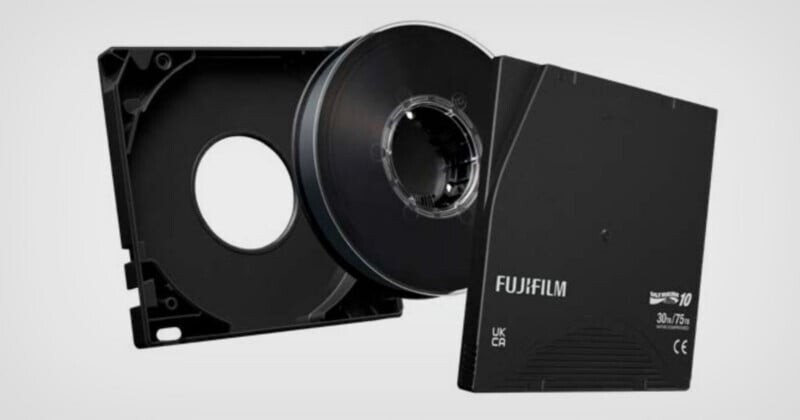
In 2025, Fujifilm released its latest generation of tape, LTO Ultrium 10. It uses patented “fine-particle hybrid magnetic particles” that combine barium ferrite (BaFe) and strontium ferrite (SrFe).
The company believes that its technological developments have helped it increase magnetic tape capacity and maintain a leading share of the global market. The new investment is expected to strengthen its production base as data volumes continue to grow.
Photo: Fujifilm LTO Ultrium 10.
Image: Fujifilm