Swift Ends Its Mission: Observatory to Burn Up in the Atmosphere
The Swift space observatory is ending its mission: NASA expects it to enter Earth's atmosphere on November 4, after more than 20 years of scientific observations.


Swift will enter the atmosphere on November 4; the risk of harm to people is extremely low. Over 22 years, the observatory studied gamma-ray bursts and many other cosmic objects, while an attempt to extend its mission failed.
Swift Observatory Is Ending Operations: Atmospheric Reentry Expected on November 4
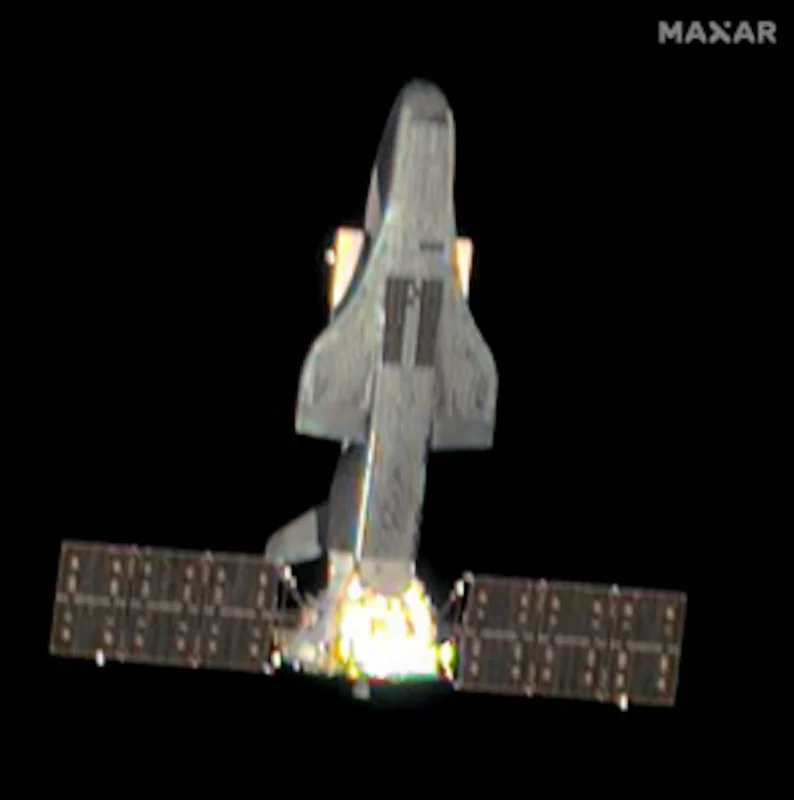
The Neil Gehrels Swift Observatory is expected to enter Earth's atmosphere on November 4. Most of the spacecraft will burn up during its descent, but NASA expects some components may survive. In theory, the debris could cause harm, but the likelihood of that outcome is extremely low.
Swift weighs 3,200 pounds. NASA estimates that atmospheric reentry will occur at around 3:30 a.m. U.S. Eastern Time, though the forecast allows for a margin of up to 11 hours. The event could therefore happen later in the day on November 4. If any parts of the spacecraft survive their passage through the atmosphere, they could fall anywhere between 20.6 degrees south and 20.6 degrees north latitude. NASA estimates the chance that Swift's reentry will harm anyone on Earth at one in 2,100.

The observatory launched in 2004 to study gamma-ray bursts—the most powerful explosions in the universe. In terms of energy and brightness, they are surpassed only by the Big Bang among phenomena known to science. Swift's primary mission was originally planned to last only a few years, but the spacecraft continued its scientific work for much longer.
During its observations, Swift studied the cosmos across a broad range of wavelengths. NASA notes that data from the observatory helped researchers investigate a wide variety of objects and events: active galaxies powered by supermassive black holes, stars with X-ray flares, supernova explosions, as well as comets and asteroids in the Solar System.

In 2022, Swift detected the most powerful gamma-ray burst ever observed. It released a colossal amount of energy—18 teraelectronvolts. The burst occurred 2.4 billion light-years away, but was so powerful that it caused a disturbance in Earth's upper atmosphere.
Another notable result came in 2013: using Swift data, scientists created a 160-megapixel map of ultraviolet emissions from nearby galaxies. Thirteen years later, the work remains striking.
Attempt to Extend the Spacecraft's Mission
NASA sought to prevent the observatory's reentry, since even the small risk associated with deorbiting could have been avoided. In the summer, the agency launched a $30 million rescue mission, but the attempt failed.
After the attempt failed, Swift continued making scientific observations. The team resumed operations and studied hundreds of additional targets, including the remnants of stellar explosions and supermassive black holes. However, on October 20, the observatory entered safe mode, beginning preparations to end its mission.

Swift's Last Images
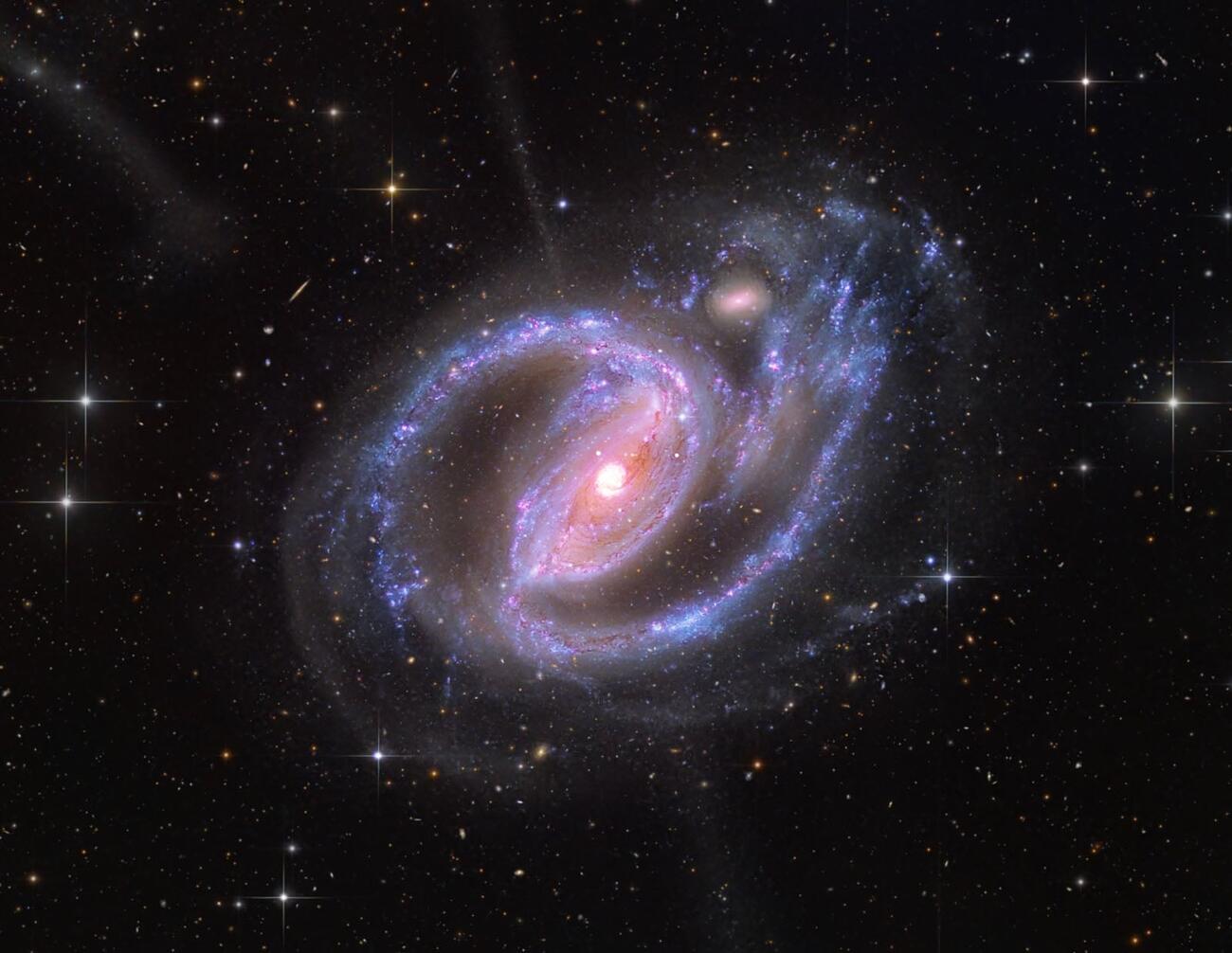
A few weeks earlier, NASA published a series of four final images. They were produced jointly by the Chandra X-ray Observatory and Swift. The set includes the Small Magellanic Cloud (SMC), NGC 1097, NGC 4151, and NGC 1365.
Chandra and Swift have combined their observations many times to study the cosmos. The two spacecraft's capabilities complement each other: Swift can quickly capture changing events in ultraviolet, X-ray, and gamma-ray wavelengths, while Chandra collects more detailed X-ray data thanks to its high-resolution observations. Together, the telescopes provided a more complete picture of cosmic objects and phenomena than either could on its own, NASA notes.

Images: NASA. X-ray data—NASA/CXC/SAO; ultraviolet data—NASA/Penn State Univ./Swift; optical data—Mark Hanson; image processing—NASA/CXC/SAO/L. Frattare.
“Goodnight, Swift.”