Bison attacks pickup in Yellowstone at night
A bison attacked a pickup in Yellowstone at night. The collision was captured on dashcam, and the driver described the damage and the dangers of encountering wildlife.

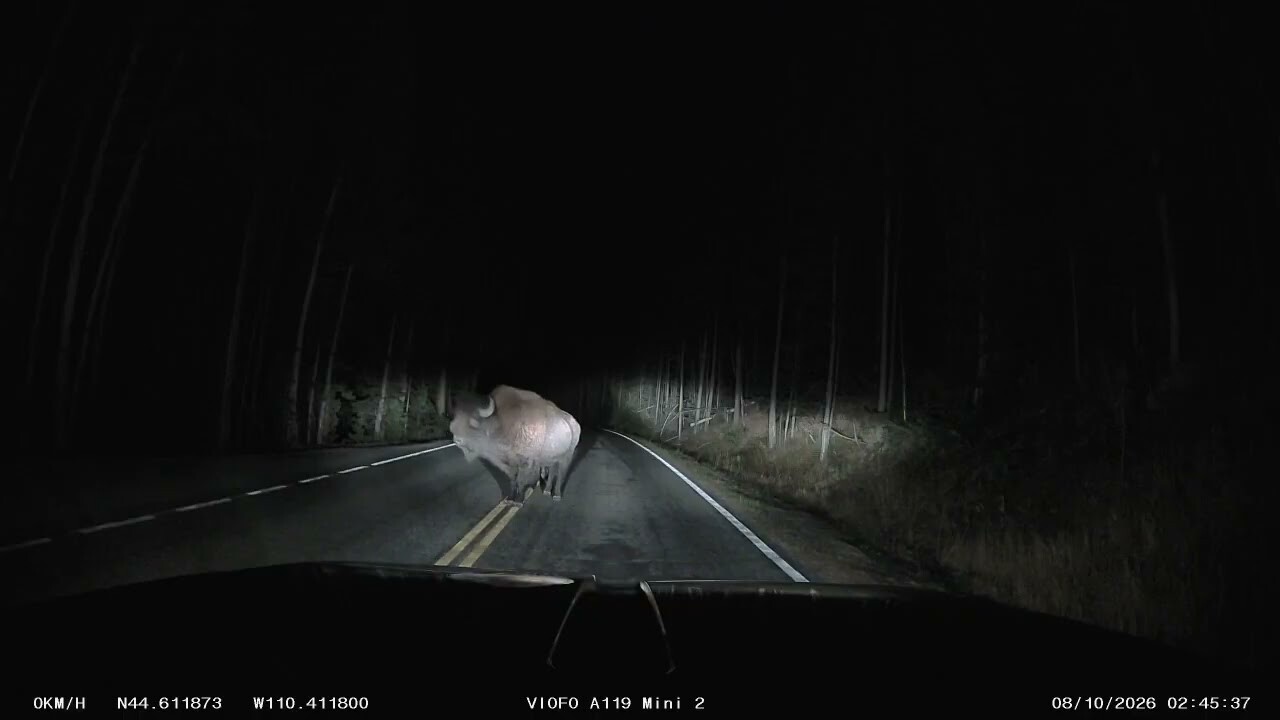
A dashcam captured a bison hitting a pickup near the Mud Volcano geothermal area. The driver was unharmed, but the vehicle was damaged. Officials advise keeping your distance from bison and yielding the right of way to them.
Bison attacks pickup in Yellowstone at night: driver captures collision on dashcam
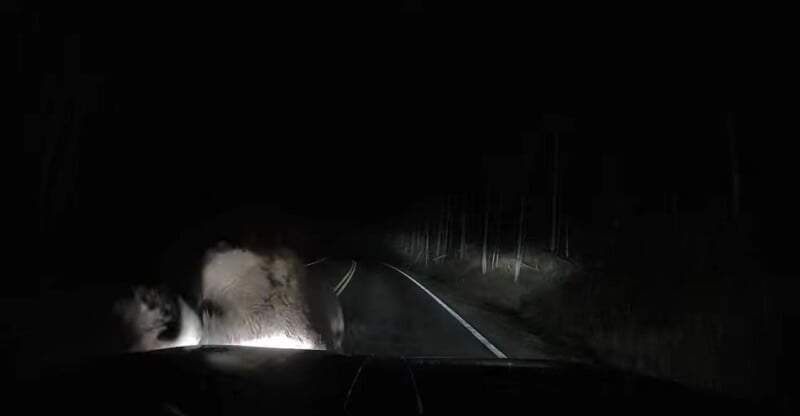
Encounters with large animals on roads in Yellowstone National Park are especially dangerous in the dark: bison can be hard to spot, and their behavior is difficult to predict. In the early hours of October 8, near the Mud Volcano geothermal area, a bison charged at a Ford Ranger pickup and struck its front end. The incident was recorded on a dashcam.
The driver was Kyle Weber, a seasonal mechanic who worked at Yellowstone Park Service Stations over the summer. At around 2:45 a.m., he was driving from Canyon Village toward Fishing Bridge. As he drove between the trees and rounded a bend, Weber spotted a bison in the middle of the road. He braked hard, stopped, and waited, watching the animal.

At first, the bison seemed to ignore the vehicle. But instead of crossing the road, it headed toward the pickup and suddenly attacked, striking the left front end. The animal then disappeared into the darkness.
Weber told Cowboy State Daily that the impact shook him hard. He knew bison could hit with tremendous force, but the collision was still jarring: the pickup was pushed back at least a foot and a half.
The bumper and hood were damaged, and a side marker light was smashed. Weber said the damage was limited, but when he makes a sharp turn, the wheel now rubs against the bumper. The headlights and other vehicle components are still working.
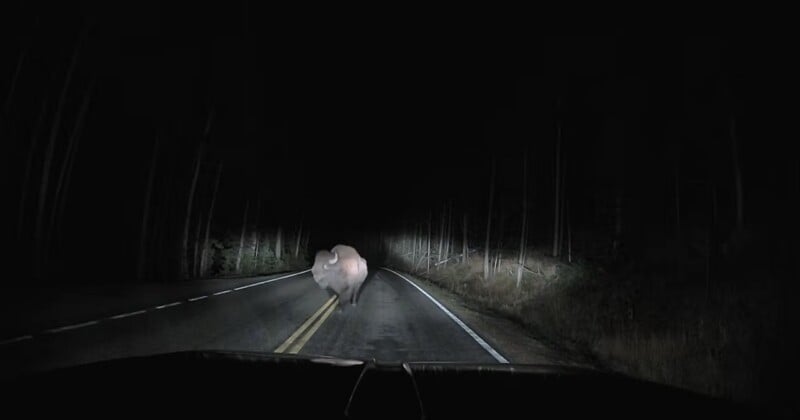
After the collision, the driver continued on and soon saw the same bison again. Weber kept his distance and followed it until it left the road and moved onto a pullout, allowing the pickup to pass. Weber said the bison was heading in the same direction, so he tried to follow it as far as he could see in the headlights.
The driver later wondered whether reversing might have prevented the impact, but he was not sure the maneuver would not have angered the animal even more. Judging by the bison’s behavior during their first encounter, Weber decided it was safer not to move the vehicle.
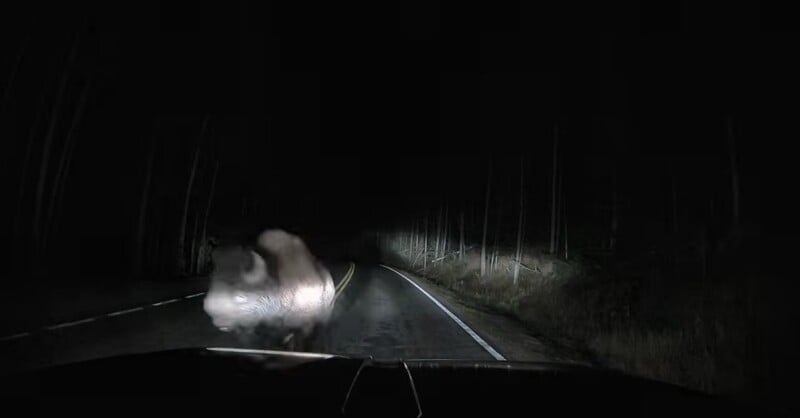
The video of the collision was posted on Facebook by Stephen Borgmeyer, Weber’s colleague and the manager of the service station at Fishing Bridge. He said motorists regularly encounter bison on park roads, especially at night, when the animals are difficult to see.
Why bison are hard to spot in the dark
Their dark coats help bison blend into their surroundings, especially on roads among trees and around bends. In addition, unlike deer and elk, bison’s eyes lack a reflective layer that makes those animals easier to see in headlights.
The U.S. National Park Service recommends staying at least 25 yards away from bison, yielding the right of way to them, and remaining inside your vehicle if you encounter animals on the road. A bison that appears calm can quickly become dangerous if approached or disturbed. These animals can run at speeds of up to 35 miles per hour, jump as high as six feet, and weigh up to 2,000 pounds.
Another bison incident took place in Yellowstone in July. Sixty-five-year-old grandfather Carl Isom-McDaniel stopped to take a photo with his grandson and, moments later, was charged by a bull and tossed into the air. The man suffered several fractures and was hospitalized; the child was unharmed.
In September, a photographer who had stopped in the park to change lenses encountered another large animal. A 70-pound cougar knocked him to the ground, and the two then struggled.