Nikon unveils fast zoom lens with teleconverter
Nikon has unveiled the Nikkor Z 120-300mm f/2.8 TC VR S, a fast zoom lens with a built-in teleconverter for sports and wildlife photography.


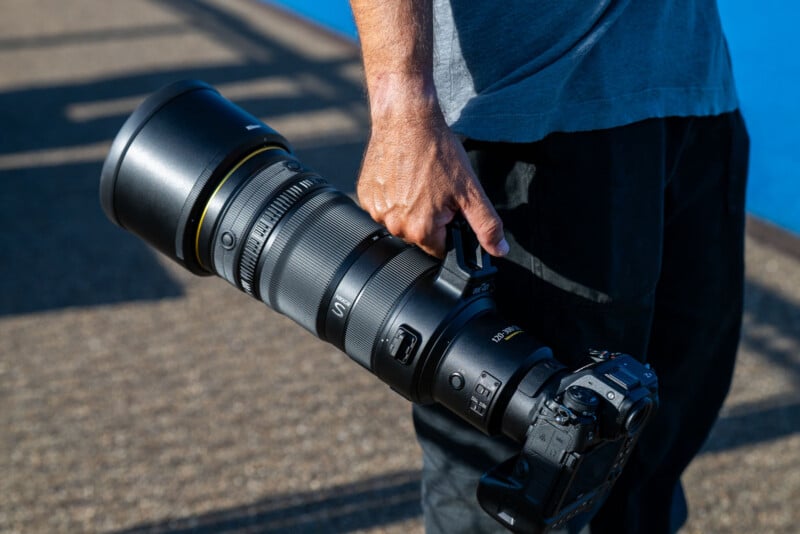
The Nikkor Z 120-300mm f/2.8 TC VR S features a built-in 1.4× teleconverter, up to 6.5 stops of stabilization, and weighs 2,735 g. Sales will begin in November 2026 at a price of $13,999.95.
Nikon unveils the Nikkor Z 120-300mm f/2.8 TC VR S telephoto lens
Nikon has revealed the full specifications of the professional Nikkor Z 120-300mm f/2.8 TC VR S zoom lens for full-frame mirrorless cameras. The company first announced the development of this model in early May 2026. The new lens is part of the Nikkor Z S-Line series.

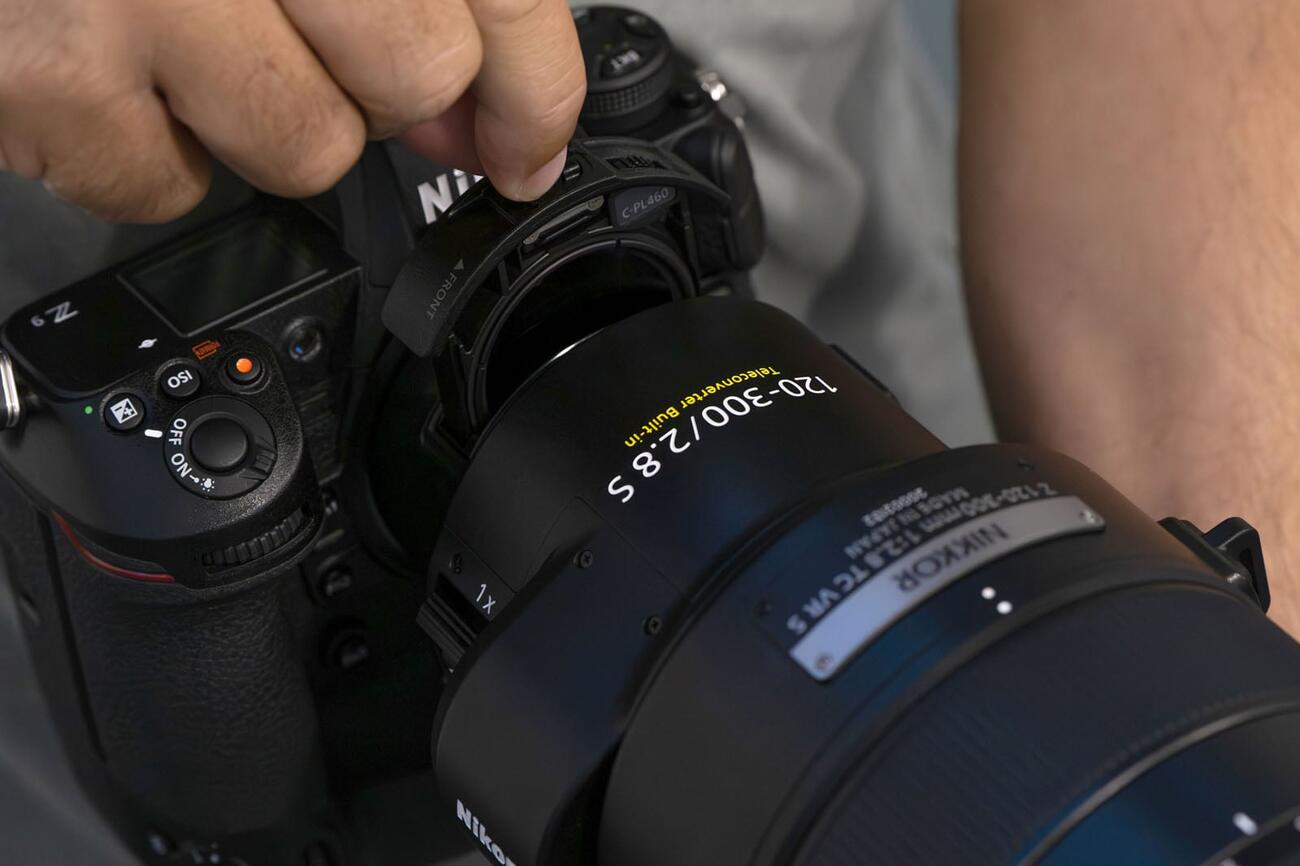
A 120–300mm focal length range and a constant maximum aperture of f/2.8 are also found on other lenses, but this is the first 120–300mm f/2.8 zoom to feature a built-in teleconverter. It is activated by a switch on the lens barrel and increases the focal length by a factor of 1.4.
Versatility for sports and wildlife photography
Nikon says the lens is designed for both indoor photography and shooting more distant subjects. The 120–300mm range and f/2.8 aperture are suited to basketball and hockey, while the built-in teleconverter expands its capabilities for baseball, soccer, and American football. The lens is also intended for wildlife photography, particularly of large mammals.

With the teleconverter activated, the lens provides an equivalent range of 168–400mm at f/4. Nikon compares this combination to the classic F-mount 200-400mm f/4 lens, which the company describes as one of its iconic models.
The manufacturer says the zoom's optical quality is comparable to that of prime lenses and is maintained across the entire frame. According to Nikon, high resolving power and soft, natural bokeh capture the finest details of athletes' movements and expressions, creating a sense of being present at the event.

Optical design and flare resistance
The lens consists of 30 elements in 24 groups, and its aperture has nine blades. Nikon ARNEO and Meso Amorphous Coat coatings are used to suppress flare and ghosting. The company calls Meso Amorphous Coat its most effective reflection-control technology to date.
The optical elements include one ED element, one fluorite element, one short-wavelength refractive (SR) glass element, one Super ED element, and one aspherical element.
This model has an SLR predecessor: the Nikon AF-S 120-300mm f/2.8E FL ED SR VR. The company has previously released a full-frame zoom with the same focal length range and maximum aperture. The earlier lens was also first announced as being in development, then fully unveiled in early 2020. It is now discontinued. Its optical design included 25 elements in 19 groups, and it weighed 3,250 g—more than 1.5 kg heavier than one of the heaviest Noct lenses, and nearly 7.2 pounds.
Dimensions, mount, and weight
The new Nikkor Z 120-300mm f/2.8 TC VR S weighs 2,735 g—just over six pounds. That's about 515 g, or 1.1 pounds, less than the F-mount model, despite the built-in teleconverter. To reduce weight, Nikon used thinner optical elements and lighter autofocus motors. The company took a similar approach with the Nikkor Z 70-200mm f/2.8 VR S II lens.

The new zoom is about 353.5 mm long, with a maximum diameter of 128 mm. The front of the lens has a 112 mm filter thread; 46 mm drop-in filters can also be used.
The tripod foot is compatible with Arca-Swiss mounts, so no separate plate is needed to attach the lens to most standard tripods. The tripod collar has a rubber grip and a built-in finger rest. The Nikkor Z 70-200mm f/2.8 VR S II also has this design.
Autofocus, stabilization, and focusing distance
The lens features a Silky Swift VCM (SSVCM) autofocus drive. Nikon promises fast and accurate focusing. Focusing is internal, with a minimum distance of 0.98 m at 120 mm and 2 m at 300 mm.

Without the teleconverter, the maximum magnification ratio is 0.18x at a focal length of 150 mm. With the teleconverter engaged, it increases to 0.25x at an equivalent focal length of 210 mm.

According to the listed specifications, the optical VR stabilization compensates for camera shake by up to 6.5 stops at the center and edges of the frame when used with a Nikon camera that supports Synchro VR. At the time of the announcement, the compatible models listed were the Z9, Z8, Z6 III, Z5 II, Z5 IIC, Zf, and ZR.
Sample photos
The lens materials include four sample photos. The product images and photos were provided by Nikon.

Price and availability
The Nikon Nikkor Z 120-300mm f/2.8 TC VR S will go on sale in mid-November 2026. The suggested retail price will be US$13,999.95.